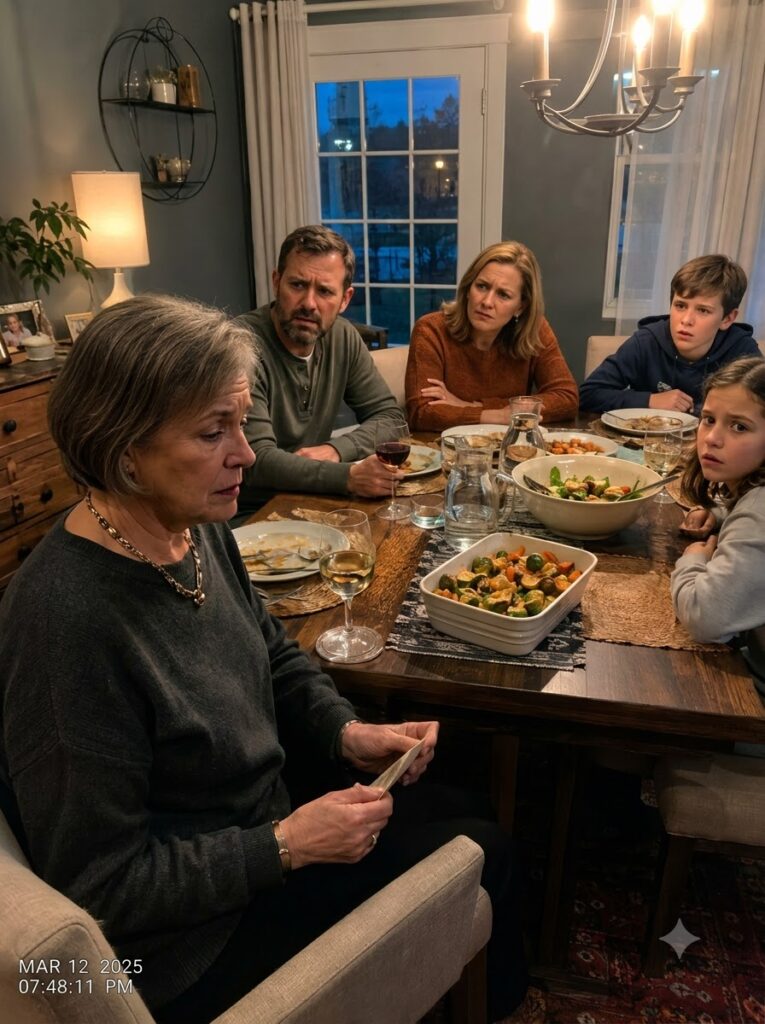
The pavement was cold and unforgiving beneath my feet as I stood there watching my son’s car disappear around the corner. Eight dollars. That’s what my daughter-in-law Rya had thrown at me before telling Brent to drive away. Eight crumpled bills that landed at my feet like I was some kind of beggar.
“That should cover your bus fare home, Dela,” she had said, her voice dripping with that particular brand of cruelty she’d perfected over the years. “Maybe next time you’ll think twice before freeloading.”
Freeloading. The word echoed in my mind as I bent down to pick up the money, my arthritic knees protesting. Thirty-seven years I’d worked as a nurse, saving every penny to help my son through college. Freeloading.
Brent hadn’t said a word. My own son, the boy I’d raised alone after his father walked out when he was five, just sat there in the driver’s seat staring straight ahead. When I looked at him through the passenger window, hoping for some sign that he’d stand up to his wife, he finally spoke. “Mom, you’re being too sensitive. Rya’s right. You can’t keep expecting us to take care of everything.”
The betrayal hit me harder than the cold evening air. Too sensitive. As if thirty years of taking care of him, of working double shifts to pay for his education, of babysitting their children for free while they went on vacation after vacation was being too sensitive.
I stood on that empty street corner in a part of town I didn’t recognize, my purse clutched tight against my chest. The sun was setting and the neighborhood didn’t look like the kind of place a sixty-five-year-old woman should be alone after dark. But apparently that didn’t matter to my family.
The fight had started over something so small. I’d asked if I could stay with them for a few days while my apartment was being fumigated. Just three days. I wasn’t asking for money. Wasn’t asking them to go out of their way. Just a place to sleep on their couch.
“We can’t have you disrupting our routine,” Rya had said, not even looking up from her phone. “The kids have school. Brent has work. You’ll just be in the way.”
When I pointed out that I’d watched those same kids every weekend for the past two years, that I’d never once said no when they needed help, Rya’s face had twisted into something ugly.
“That’s different. That’s family helping family. This is you expecting us to drop everything for your problems.”
The hypocrisy was breathtaking. Family helping family, but only when it benefited them.
“I raised him alone,” I’d said quietly, looking at Brent. “I worked nights so I could be there for your games, your school events. I never asked anyone for help.”
“Well, maybe you should have,” Rya snapped. “Maybe if you’d planned better, you wouldn’t need to come running to us every time something goes wrong.”
That’s when Brent finally spoke up to defend his wife. “Rya has a point. Mom, you’re an adult. You should be able to handle these things yourself.”
The words cut deep because they were so unfair. This wasn’t about me running to them for help. This was about family being there for each other. But apparently, I was the only one who remembered what family meant.
Now I stood alone on this strange street holding eight dollars and trying to figure out how to get home. The nearest bus stop was three blocks away, according to a man at a gas station. But the buses had stopped running this route an hour ago. A taxi would cost at least twenty dollars. Money I didn’t have.
I started walking, my feet already aching in the sensible shoes I’d worn to what I thought would be a family dinner. Each step reminded me of how thoroughly I’d been discarded, like an old piece of furniture they’d finally decided to throw away.
The convenience store on the corner was the only place with its light still on. The clerk, a young man with tired eyes, looked up as I entered.
“You okay, ma’am? You look like you’ve been crying.”
I touched my cheek, surprised to find it wet. I hadn’t even realized I was crying.
“I’m fine,” I lied the way I’d been lying about being fine for years. “Just need to use your phone to call a cab.”
“Phone’s broken,” he said apologetically. “But there’s a pay phone outside.”
Of course there was, because this night couldn’t get any worse.
I stared at the eight dollars in my hand, knowing it wasn’t enough for a cab. The pay phone would cost fifty cents, leaving me with seven-fifty, not enough for anything useful.
That’s when I saw the lottery machine. I’d never been a gambling woman, never bought a scratch-off ticket or played the numbers. But standing there in that fluorescent-lit store, holding the money my daughter-in-law had thrown at me like I was trash, something shifted inside me.
“Does that lottery machine work?” I asked the clerk.
He nodded. “Powerball drawing tonight. Jackpot’s up to sixty-two million.”
Sixty-two million. The number was so large it didn’t seem real. I thought about Rya’s designer handbags, about the way she’d redecorated their kitchen twice in the past year while I’d been eating peanut butter sandwiches for dinner to make my social security stretch.
“I’ll take one ticket,” I heard myself say. “Quick pick.”
The machine hummed as it printed my ticket. Five dollars gone, leaving me with three dollars and the longest of long shots. But as I folded that ticket and slipped it into my purse, I felt something I hadn’t felt in years. Defiance.
Let them call me too sensitive. Let them say I was freeloading. I’d spent my whole life taking care of other people, putting their needs before my own. Maybe it was time I took a chance on myself.
The walk home took two hours. Two hours of sore feet and aching knees, of replaying every cruel word, every dismissive look. But with each step, something was hardening inside me. A resolve I didn’t know I still possessed.
By the time I reached my apartment, I’d made a decision. Win or lose, something had to change. I was done being their convenient caretaker and inconvenient burden. I was done accepting crumbs of affection from people who should have loved me unconditionally. I was done being too sensitive about being treated like I didn’t matter, because maybe, just maybe, I was about to matter more than any of them could imagine.
The numbers on my television screen didn’t register at first. I’d been half asleep on my couch, the lottery ticket forgotten in my purse since that horrible night a week ago. The drawing was just background noise while I nursed my third cup of tea and tried to ignore the silence of my phone.
Seven days. Seven days since Brent and Rya had left me on that street corner, and not one phone call, not even a text to make sure I’d made it home safely. The silence spoke louder than any argument ever could.
“Tonight’s winning Powerball numbers are seven, fourteen, twenty-one, thirty-five, forty-seven, and Powerball number nine.”
I almost didn’t check. What was the point? But something made me reach for my purse. Maybe just to have something to do with my hands besides worry them raw.
The ticket was crumpled from being shoved between my keys and wallet. I smoothed it out, squinting at the tiny numbers in the lamplight.
Seven, fourteen, twenty-one, thirty-five, forty-seven, and Powerball nine.
My hands started shaking before my brain fully processed what I was seeing. I checked again, then again. Then I turned up the volume on the television, waiting for them to repeat the numbers, certain I’d made a mistake.
But there they were again, the exact same numbers printed on my wrinkled five-dollar ticket.
Sixty-two million dollars.
I set the ticket down carefully, as if it might disintegrate if I handled it too roughly. My heart was hammering so hard I could feel it in my throat. This couldn’t be real. Things like this didn’t happen to women like me. Women who got abandoned on street corners by their own families.
I didn’t sleep that night. I sat at my kitchen table staring at that ticket and trying to wrap my mind around what it meant. By morning, I’d made a decision that surprised even me.
I wasn’t going to tell anyone. Not yet.
The first test came sooner than I expected. My phone buzzed with a text message just as I was making my morning coffee. Rya’s name appeared on the screen and my stomach clenched automatically. Even before I read the message, I knew it wouldn’t be an apology.
“Stop being so dramatic, Dela. It was just a joke. You’re acting like we committed some crime. Brent feels bad about the other night. Maybe we can do dinner this weekend if you promise not to make a big deal about everything.”
Just a joke. She thought abandoning me in a dangerous neighborhood with eight dollars was a joke. And now she was graciously offering to let me back into their lives if I promised to pretend it never happened.
I stared at that message for a long time, my coffee growing cold in my hands. A week ago, I would have jumped at the chance to reconcile. I would have swallowed my hurt and shown up with a smile, grateful for whatever scraps of affection they threw my way.
But that was before.
Before I knew what I now knew, I typed back a simple response.
“I’m busy this weekend.”
Her reply came immediately. “Busy with what? You never do anything.”
The casual cruelty of it took my breath away. You never do anything. As if my life was so empty, so meaningless that the idea of me being busy was laughable.
I turned off my phone and went to get dressed. I had things to do, important things.
The lottery office wasn’t what I’d expected. I’d imagined something grand, official. Instead, it was a modest office building downtown with fluorescent lighting and worn carpeting. The woman behind the desk, Sarah, according to her name tag, had kind eyes and a patient smile.
“First time winner?” she asked as I handed over my ticket with trembling fingers.
“First time playing,” I admitted.
She checked the ticket twice, then smiled. “Well, congratulations, Mrs. Rivers. You’ve won sixty-two million dollars.”
The words still didn’t feel real. Even as she explained my options — lump sum or payments, taxes, and legal requirements — it felt like I was watching someone else’s life unfold.
“Take your time deciding,” Sarah said. “But I’d recommend getting a lawyer and an accountant before you make any major decisions, and maybe think carefully about who you tell. Money changes relationships, sometimes in ways people don’t expect.”
I thought about Rya’s text message, about her casual dismissal of my pain.
Money changes relationships. What she didn’t know was that mine had already changed.
The next few days were strange. I went through my normal routine — grocery shopping, laundry, my weekly visit to the library — but everything felt different, like I was observing my life from the outside.
At the grocery store, I found myself standing in front of the expensive steaks I’d never been able to afford, knowing I could buy the entire meat department if I wanted to. But I bought my usual chicken thighs and day-old bread.
Old habits die hard.
The second test came on Thursday. Brent called while I was reading in my chair by the window.
“Hey, Mom.” His voice was careful, apologetic. “Look, about the other night. Rya feels bad about how things went down.”
Rya feels bad. Not him, not we. Rya.
“She was just stressed,” he continued when I didn’t respond. “You know how she gets when she’s planning events. The kids had that school thing this weekend and she was overwhelmed.”
Always an excuse. Always a reason why her behavior was justified and my feelings didn’t matter.
“Anyway,” he went on, “we were wondering if you could watch the kids Saturday night. We got tickets to that new show downtown and our regular babysitter cancelled.”
There it was. The real reason for the call. Not because they missed me, not because they were sorry, because they needed something.
“I can’t,” I said simply.
“What do you mean you can’t? You never have plans on Saturday nights. You never do anything.”
You never have plans. The casual assumptions about my worthless life.
“I’m busy,” I repeated.
“Busy with what?” The irritation was creeping into his voice now. “Mom, we really need you to do this. The tickets cost three hundred dollars.”
Three hundred dollars for a night out, but they couldn’t spare twenty for a cab to get me home safely. The math of their priorities was crystal clear.
“Find another babysitter,” I said, and hung up.
My phone rang immediately. Then again. I turned it off and sat in the quiet of my apartment, marveling at how good it felt to say no.
That weekend, instead of babysitting my grandchildren while their parents enjoyed a three-hundred-dollar date night, I met with a lawyer, a good one, recommended by Sarah at the lottery office. His office had real wood paneling and leather chairs that didn’t have duct tape covering the tears.
“You want to keep this quiet for now,” he said after I’d explained my situation. “That’s smart. Gives you time to make good decisions before the pressure starts.”
“What kind of pressure?”
He leaned back in his chair, studying me. “You’d be surprised how fast family dynamics change when money enters the picture. People who’ve never given you a second thought suddenly remember how much they love you.”
I thought about Rya’s text, about Brent’s assumption that I’d drop everything to babysit. They didn’t love me now. What would they feel when they found out about the money? Love or just a more intense version of the taking they’d always done.
“I want to set some things up,” I told him. “Before anyone knows. I want to be prepared.”
He smiled. “That’s the smartest thing I’ve heard from a lottery winner in twenty years.”
As I walked out of his office that afternoon, my phone buzzed with another message from Rya.
“Really, Dela? You couldn’t help us out one night? Brent is so disappointed in you right now.”
I stared at that message, thinking about the sixty-two million dollars in my future and the years of disappointment in my past. They had no idea what disappointment really looked like, but they were about to learn.
The chest pains started on a Tuesday morning, sharp and sudden enough to make me drop my coffee mug. It shattered on the kitchen floor, spreading ceramic shards and dark liquid across the linoleum I’d been meaning to replace for years.
As I knelt to clean up the mess, another pain shot through my chest. This one was real. The stress of the past few weeks, the sleepless nights spent planning my new life, the weight of keeping such an enormous secret. My body was finally protesting.
But as I sat in the emergency room three hours later, watching nurses bustle past with their practiced efficiency, an idea began to form. A terrible, necessary idea.
I needed to know exactly where I stood with my family. Not just the casual cruelty I’d grown accustomed to, but how they’d react when I truly needed them. When I was vulnerable and scared and couldn’t give them anything in return.
The doctor, a young woman who reminded me of myself thirty years ago, was reassuringly thorough.
“It’s stress related,” she explained after running tests. “Your heart is fine, but your blood pressure is elevated. Have you been under any unusual pressure lately?”
I almost laughed. Unusual pressure. If she only knew.
“I want you to take it easy for the next few weeks,” she continued. “Reduce stress where possible. Do you have family who can help out?”
That was the question, wasn’t it?
I called Brent from the hospital parking lot, my hands still shaking slightly from the afternoon’s events.
“Mom?” He sounded distracted. Probably at work. “What’s up?”
“I’m at the hospital,” I said, not having to fake the tremor in my voice. “I had chest pains this morning.”
The silence stretched long enough that I wondered if the call had dropped.
“Are you okay?” he asked finally, but his tone was more annoyed than concerned, like I’d interrupted something important.
“The doctor says it’s stress related, but they want me to take it easy for a while. I was wondering if I could stay with you and Rya for a few days, just until—”
“Mom, this really isn’t a good time.”
The words came fast, rehearsed, like he’d been preparing for this conversation.
“Rya’s got that big presentation at work and the kids have finals coming up. The house is just chaos right now.”
“I wouldn’t be any trouble,” I said quietly. “I could help with the kids, maybe cook.”
“No, it’s not about helping. It’s just, you know how you get when you’re stressed. All anxious and needy. We can’t handle that right now on top of everything else.”
Anxious and needy. That’s how my son saw me when I was scared and in pain. Not as a mother who’d sacrificed everything for him, but as an inconvenience.
“What if I need help?” I asked. “What if something happens?”
“You’ll be fine,” he said with the casual confidence of someone who’d never had to face anything truly frightening alone. “You’re tough. You always figure things out.”
Tough. I was tough when they needed me to be, when it meant they didn’t have to worry about me. But when I needed them to be strong for me, suddenly I was anxious and needy.
“I have to go, Mom. Meeting in five minutes.”
The line went dead, leaving me sitting in my car with the taste of betrayal bitter in my mouth.
That evening, I called again. This time, Rya answered.
“Oh, Dela, Brent told me about your little episode today.” Her voice dripped with the kind of false sympathy that felt worse than outright hostility. “You know, my mother had the same thing a few years ago, stress related chest pains. The doctor told her it was all in her head.”
All in her head. As if my fear and pain were just figments of an overactive imagination.
“The thing is,” Rya continued, “you really need to learn to manage your anxiety better. Have you considered seeing a therapist? There are some very affordable options for seniors.”
Affordable options for seniors. She was already categorizing me, putting me in a box marked elderly problem to be managed.
“I was hoping I could stay with you for just a few days,” I said, hating how small my voice sounded. “Just until I feel steadier.”
“Oh, honey, I wish we could help, but our guest room is being used as Brent’s office right now. And honestly, with your health issues, wouldn’t you be more comfortable somewhere with, you know, proper facilities?”
Proper facilities. She was talking about nursing homes, care facilities, places where inconvenient elderly parents got stored away.
“What kind of facilities?” I asked, though I already knew.
“Well, there’s that nice assisted living place on Maple Street. Very reasonable rates. They have nurses on staff, activities for the residents. You might actually enjoy it more than being cooped up here with all our chaos.”
The suggestion hit me like a physical blow. She wasn’t just refusing to help me through a health crisis. She was using it as an opportunity to suggest I be permanently removed from their lives.
“I see,” I managed to say.
“It’s really for the best,” Rya continued, warming to her theme. “You wouldn’t have to worry about grocery shopping or cleaning or any of that domestic stuff, and we could visit whenever our schedules allow.”
Whenever their schedules allowed, which based on the past few weeks would be never.
“I should let you go,” I said.
“Feel better, Dela, and really think about what I said. Sometimes a change of scenery is exactly what we need.”
After I hung up, I sat in my quiet apartment and felt something die inside me. Not hope. That had died weeks ago on a street corner with eight crumpled dollars. What died was the last vestige of belief that blood meant anything to these people.
They weren’t just refusing to help me in a moment of genuine need. They were actively trying to get rid of me permanently. Rya had practically been shopping for nursing homes while I was still explaining my symptoms.
I opened my laptop and started researching. Not nursing homes. Law firms, estate planning attorneys, financial advisers who specialized in lottery winnings.
If my family wanted to treat me like a burden to be disposed of, then I’d make sure they never had the chance to burden me again.
The next morning, I called my lawyer.
“I want to change my will,” I told him. “And I want to set up some trusts. Specifically, I want to make sure that if anything happens to me, certain people can’t claim they were caring for me out of love.”
“Protecting against undue influence claims,” he said knowingly. “Smart, especially given what you’ve told me about their recent behavior.”
“There’s something else,” I said. “I want to test them one more time, but I want it documented.”
“What kind of test?”
I told him about the chest pains, about their responses, about Rya’s suggestion that I be warehoused in assisted living.
“I want to see how far they’ll go,” I said. “I want to know exactly who these people are before I decide what to do with the rest of my life.”
He was quiet for a long moment. “Mrs. Rivers, are you sure you want to put yourself through that? You already know they don’t treat you well.”
“I know they don’t respect me,” I corrected. “But I need to know if there’s any love left at all, any genuine concern. Because if there isn’t—” If there isn’t, I thought about sixty-two million dollars and thirty-seven years of nursing and a son who called me anxious and needy when I was scared and in pain. “If there isn’t, then I need to know that, too.”
Over the next week, I put their responses to the test in small ways. I called about feeling dizzy, about having trouble with my medications, about being confused and scared.
Each time the response was the same: irritation, suggestions that I handle it myself, recommendations for cheap senior services. Not once did either of them offer to come over. Not once did they suggest I see their family doctor instead of relying on emergency rooms and walk-in clinics. Not once did they treat me like someone they actually cared about.
By Friday, I had my answer. They didn’t love me. They barely tolerated me. And when I became inconvenient, when I needed them instead of the other way around, they were actively trying to get rid of me.
The knowledge should have destroyed me. Instead, it set me free, because now I knew exactly what I was dealing with, and I could plan accordingly.
The dinner invitation came three weeks later, delivered with Rya’s typical blend of false warmth and underlying demand.
“We’re having a little family gathering Sunday evening,” she said when she called. “Nothing fancy, just us and the kids. Brent thought it would be nice to have you over.”
Brent thought. Not we thought. Brent thought, which meant this was probably his guilty conscience finally getting to him after weeks of treating me like a diseased relative.
“What’s the occasion?” I asked.
“Oh, you know, just family time. We realized it’s been a while since we all got together properly.”
It had been exactly twenty-six days since they’d abandoned me on that street corner. Twenty-six days since Rya had suggested I move into assisted living because I was having chest pains. But apparently we were all supposed to pretend those things had never happened.
“Should I bring anything?” I asked, already knowing the answer.
“Actually, if you could make that potato salad the kids like, that would be great. And maybe pick up some dinner rolls. The good ones from Romano’s bakery, not the grocery store ones, of course.”
Even their invitation came with a shopping list and specific requirements. I was welcome at their table as long as I paid for the privilege and brought my own contributions.
“What time should I be there?”
“5:30. Oh, and Dela, maybe wear that blue dress, the one from Easter. You looked so nice in it.”
The blue dress that was three years old and starting to fray at the seams, but was apparently the best I could manage in their eyes.
“Got it.”
Sunday evening, I stood on their front porch holding a covered dish of potato salad and a bag of expensive dinner rolls, listening to the sounds of laughter and conversation from inside.
Through the window, I could see my grandchildren, Emma and Jake, running around the living room while Brent and Rya sat comfortably on their leather sectional, glasses of wine in hand. The scene looked perfect, warm and welcoming, and exactly like the family dinners I’d dreamed of having with them for years.
I should have known it was too good to be true.
Rya answered the door, wearing a flowing silk blouse that probably cost more than my monthly grocery budget, her smile bright and artificial.
“Dela, so glad you could make it. Come in, come in.”
The house smelled like roast beef and garlic, expensive candles burning on every surface. Everything was perfectly arranged, from the fresh flowers on the dining table to the throw pillows artfully scattered on the couch.
It was the kind of home I’d dreamed of having when Brent was young, back when I was working double shifts and eating ramen noodles for dinner so he could have new school clothes.
“Grandma!”
Emma, eight years old with Brent’s dark eyes, ran over and hugged my legs. At least the children still seemed genuinely happy to see me.
“Hi, sweetheart,” I said, kissing the top of her head. “How’s school going?”
“Good. I got an A on my science project. Want to see it?”
Before I could answer, Rya swept in and redirected Emma toward the kitchen. “Why don’t you help Grandma put her food away, honey? Dinner’s almost ready.”
In the kitchen, I arranged my potato salad and dinner rolls alongside the spread Rya had prepared. Everything looked expensive and professionally done, from the perfectly browned roast to the elaborate side dishes arranged in matching serving bowls.
“This all looks wonderful,” I said, meaning it.
“Thanks. I’ve been cooking all day,” she said it with the air of someone who’d just completed a marathon, though I noticed the price stickers still on some of the containers, suggesting at least part of the meal had been catered.
Brent appeared in the doorway, beer in hand, and gave me the kind of awkward hug that felt more like an obligation than affection.
“Hey, Mom. Good to see you.”
“Good to see you, too.”
I studied his face, looking for some sign of genuine warmth, some indication that he’d missed me over the past weeks, but his smile was the same polite expression he might give a neighbor or coworker.
“How have you been feeling?” he asked. “Any more of those chest pain episodes?”
The question sounded concerned enough, but his tone was casual, like he was asking about the weather.
“I’m managing,” I said.
“Good, good. That’s what I figured. You’re tough.”
There it was again. I was tough when it meant they didn’t have to worry about me. Didn’t have to actually help or care.
Dinner started pleasantly enough. The children chattered about school and friends. Brent talked about a promotion he was hoping for at work. And Rya shared gossip about their neighbors.
For a few minutes, I let myself relax into the illusion that this was what I’d always wanted, a normal family dinner where I belonged.
That illusion shattered about halfway through the meal.
“So, Mom,” Brent said, cutting into his roast beef with surgical precision. “Rya and I have been talking, and we think it might be time for you to consider some lifestyle changes.”
The way he said it, so carefully neutral, made my stomach clench.
“What kind of changes?”
Rya leaned forward, her expression earnest and concerned in that particular way that meant she was about to say something devastating while pretending it was for my own good.
“We’re worried about you living alone,” she said. “Especially after those health scares. What if something serious happens and there’s no one there to help?”
“I have neighbors,” I said carefully. “And I can always call 911.”
“But that’s not really a long-term solution, is it?” Brent chimed in. “I mean, you’re sixty-five now. These things are only going to get worse.”
These things. My age, my health, my very existence had become these things. Problems to be managed rather than natural parts of life.
“What are you suggesting?” I asked, though I was beginning to suspect I already knew.
Rya brightened as if she’d been waiting for this opening.
“There’s this wonderful place called Sunset Manor. It’s an assisted living community, very well-regarded. They have activities, medical staff on site, meal plans. It would take so much stress off your shoulders.”
“And off ours,” Brent added with brutal honesty. “We worry about you all the time, Mom, whether you’re eating right, taking your medications, staying safe. It would be such a relief to know you were somewhere with professional care.”
Professional care. They were talking about shipping me off to an institution so they wouldn’t have to feel guilty about ignoring me anymore.
“Have you looked into this place?” I asked.
“Oh, yes,” Rya said eagerly. “I drove by last week. Very nice grounds, friendly staff, and it’s not too expensive. Well, within your social security budget, if you’re careful about spending.”
Within my social security budget. They’d calculated exactly how much my warehousing would cost and determined it was affordable. How thoughtful of them.
“The best part,” Rya continued, “is that it’s only twenty minutes away. We could visit regularly.”
“How regularly?” I asked.
Brent and Rya exchanged a glance.
“Well, you know, with our schedules, probably monthly, maybe more during holidays.”
Monthly visits. After a lifetime of raising Brent, of being there for every scraped knee and broken heart, of sacrificing my own dreams so he could achieve his, they were offering me monthly visits.
“What about the children?” I asked. “When would I see Emma and Jake?”
Another glance between them. This one longer, more uncomfortable.
“The thing is,” Rya said slowly, “we think it might be better if their visits were supervised. You know how you get sometimes when you’re stressed or upset. We don’t want the kids to see you that way.”
Supervised visits. They were talking about me like I was a danger to my own grandchildren. Like my love for them was somehow toxic.
“How do I get?” I asked quietly.
“Oh, you know.” Rya waved her hand vaguely. “Emotional, needy. The kids don’t understand why grandma’s always sad or worried.”
Always sad or worried. Because I’d been mourning the loss of my family while they’d been planning to dispose of me.
“I think this is really the best solution for everyone,” Brent said, his tone final. “You get professional care and social activities. We get peace of mind, and the kids get to see you when you’re at your best.”
I looked around the table at these people who were supposed to love me. My son, who was calmly discussing shipping me away like I was a problem to be solved. My daughter-in-law, who was practically glowing with excitement at the prospect of getting rid of me permanently. My grandchildren, too young to understand what was happening, but old enough to absorb the message that grandma was someone to be managed and contained.
“I need to think about it,” I said.
“Of course,” Rya said brightly. “Take your time. Though I should mention they have a waiting list, so if you’re interested, we should probably put your name down soon.”
They’d already researched waiting lists. They’d been planning this for weeks, maybe months, and tonight was just the formal presentation of their decision.
I excused myself to use the bathroom, needing a moment away from their eager faces and carefully reasoned arguments for why I should disappear from their lives.
In the bathroom mirror, I looked at my reflection — the blue dress Rya had specifically requested, the careful makeup I’d applied to look nice for them, the hopeful expression I’d worn walking into this house.
I looked like exactly what I was: a lonely old woman desperately trying to earn love from people who saw her as a burden.
But I wasn’t just a lonely old woman anymore.
I was a lonely old woman with sixty-two million dollars and absolutely nothing left to lose.
When I returned to the dining room, they were all looking at me expectantly, like they thought I might have come to my senses in the bathroom and decided to thank them for solving the problem of my existence.
“I’ve made my decision,” I said, sitting back down at the table.
“Oh, wonderful.” Rya clapped her hands together. “I think you’re going to love it there. Should I call tomorrow and get you on the list?”
I looked at each of them in turn. My son, who’d never once asked if I was lonely. My daughter-in-law, who’d calculated the cost of my disposal. My grandchildren, who were being taught that love came with conditions and expiration dates.
“No,” I said quietly. “I don’t think I’ll be needing assisted living after all.”
The silence that followed was sharp enough to cut glass.
The silence stretched until Rya’s forced laugh broke it. “What do you mean you won’t be needing it?” she asked, her smile becoming strained around the edges. “Dela, we’ve explained why this is the best option for everyone.”
I folded my napkin carefully and placed it beside my plate.
“I mean, I’ve made other arrangements.”
Brent leaned forward, his brow furrowed. “What kind of arrangements? Mom, you can’t just ignore reality because you don’t like it.”
Reality? The irony wasn’t lost on me.
“Actually,” I said, reaching into my purse, “I think it’s time we all faced reality.”
I pulled out the lottery ticket. Not the original, which was safely stored in my lawyer’s vault, but a photocopy I’d had made for exactly this moment.
I placed it on the table between the expensive serving dishes and watched their expressions change as they read the numbers.
“What is this?” Rya asked, though her voice had gone very quiet.
“It’s a lottery ticket,” I said calmly. “From the night you left me on Elm Street with eight dollars.”
Brent picked up the paper, his eyes scanning the numbers. “Mom, what are you trying to prove? So you bought a lottery ticket. So what?”
“Check the winning numbers from three weeks ago,” I suggested. “They’re on your phone.”
I watched as Brent pulled out his phone, his fingers moving across the screen. I saw the exact moment he found the winning numbers. Saw his face go pale as he compared them to the paper in his hands.
“This is—” He started, then stopped, looking up at me with something I’d never seen in his eyes before.
Fear.
“Sixty-two million dollars,” I finished for him. “The jackpot you heard about on the news three weeks ago. That was me.”
Rya snatched the paper from Brent’s hands, her eyes darting between the numbers on the page and the phone screen. Her perfectly applied lipstick had left marks on her wine glass. And for the first time since I’d known her, she looked genuinely shaken.
“You won the lottery?” she whispered.
“I did.”
The children, sensing the change in atmosphere, had gone quiet. Emma was looking back and forth between the adults, trying to understand why everyone suddenly looked so serious.
“Why didn’t you tell us?” Brent’s voice cracked slightly on the question.
I leaned back in my chair, studying the faces around the table.
“I wanted to see how you’d treat me when you thought I had nothing to offer you.”
The truth of that statement hung in the air like smoke. Rya’s mouth opened and closed soundlessly while Brent ran his hands through his hair in a gesture I remembered from his childhood when he’d been caught in a lie.
“Mom, that’s not — we weren’t—” Brent started, but couldn’t seem to finish the sentence.
“You weren’t what?” I asked gently. “You weren’t trying to get rid of me? You weren’t calculating the cost of shipping me off to an institution? You weren’t planning to limit my access to my own grandchildren?”
“We were worried about you,” Rya said, but her voice lacked its usual conviction.
“Were you? Because from where I sit, it looked like you were solving a problem. An inconvenient, needy, elderly problem that was interfering with your perfect life.”
I reached into my purse again and pulled out a folder.
“I’ve spent the past three weeks documenting our interactions. Every phone call, every text message, every conversation about my future that didn’t include me in the decision-making process.”
Brent’s face was now completely white.
“What are you saying?”
“I’m saying I know exactly who you are, both of you. I know that when I called scared and in pain, you told me I was being dramatic. I know that when I needed help, you suggested I pay for professional care. I know that when you invited me here tonight, it wasn’t because you missed me. It was because you wanted to present your final solution to the problem of my existence.”
Rya found her voice, though it was higher and more strained than usual. “That’s not fair, Dela. You’re twisting everything. We love you.”
“Do you?” I asked. “Because I’ve been trying to figure out what love looks like in this family, and I’m having trouble identifying it.”
I opened the folder and pulled out printed copies of text messages.
“Here’s you, Rya, telling me to stop being dramatic about being abandoned on a street corner. Here’s you suggesting I should learn to manage my anxiety better when I was having chest pains. And here—” I pulled out another page. “Is you researching nursing homes and calculating costs while I was explaining my symptoms.”
Her face flushed red. “I was trying to help.”
“Help whom? Because it wasn’t me.”
I turned to Brent.
“And you? When I called from the hospital, you were annoyed that I’d interrupted your day. When I asked if I could stay with you during my recovery, you called me anxious and needy. When I needed my son, you offered me excuses.”
“Mom, please,” Brent said, and for a moment, he sounded like the little boy who used to crawl into my bed during thunderstorms. “We can fix this. We can do better.”
“Can you? Because I’ve been giving you chances to do better for weeks now. And every single time, you’ve chosen to see me as a burden rather than your mother.”
I pulled out my phone and showed them the screen.
“This is my lawyer’s number. I called him yesterday and made some changes to my estate planning.”
The silence that followed was deafening.
“What kind of changes?” Rya asked, her voice barely above a whisper.
“Well, originally I was planning to leave everything to Brent and the children. A trust fund for Emma and Jake’s education, the house, whatever was left of my savings.”
I paused, watching their faces.
“But then I started thinking about what you’d said tonight, about how I need professional care, how I’m too emotional and needy for my own grandchildren to be around unsupervised.”
“We didn’t mean—” Brent started.
“You meant every word,” I cut him off. “And I believe you. So I’ve made arrangements that reflect your honest assessment of my character and capabilities.”
I reached into the folder one more time and pulled out a legal document.
“This is a copy of my new will. The children will receive a modest trust fund for education. Enough for college, but not enough to make them targets. The rest goes to various charities that support elderly people who’ve been abandoned by their families.”
Rya made a sound somewhere between a gasp and a sob.
“There’s also this,” I continued, pulling out another document. “A detailed account of every dollar I’ve spent supporting this family over the years. Every mortgage payment I helped with, every vacation I funded, every time I bought school clothes or paid for activities or covered your emergencies, with interest calculated at current market rates.”
Brent’s hands were shaking as he took the paper.
“Mom, this says — this says we owe you over two hundred thousand dollars.”
“That’s correct. Twenty-seven years of financial support documented and calculated. I’m not asking for it back. Consider it my final gift to you. But I wanted you to see exactly how much your needy, anxious mother contributed to the life you’re so eager to protect from her influence.”
The room was so quiet. I could hear the grandfather clock ticking in the hallway.
Emma tugged on her mother’s sleeve. “Mommy, why is everyone crying?”
Because they were crying. Rya’s perfect makeup was streaking down her cheeks, and Brent’s eyes were red-rimmed as he stared at the numbers on the paper.
“I’m not doing this to hurt you,” I said gently. “I’m doing this because you’ve made it very clear that you don’t want me in your lives unless I’m useful to you. And I’m tired of being useful to people who don’t love me.”
“We do love you,” Brent said desperately. “Mom, we do. We just — we made mistakes.”
“You made choices,” I corrected. “Over and over again. You chose to see me as a problem to be managed rather than a person to be cherished. Tonight was just the final presentation of a decision you made weeks ago.”
I stood up, my chair scraping against the hardwood floor.
“I want you to know that I don’t hate you, either of you. But I also don’t trust you, and I can’t build a relationship with people who only value me when I have something they want.”
“Where are you going?” Rya asked, panic creeping into her voice.
“Home. To my apartment. The one you think is too dangerous for me to live in alone.”
I gathered my purse and folder.
“Don’t worry about visiting me at Sunset Manor. I won’t be there.”
“Mom, wait.” Brent stood up so quickly his chair fell over. “Please, we can talk about this. We can work it out.”
I looked at him for a long moment. This man I’d raised, sacrificed for, loved unconditionally for thirty-seven years.
“Can we? Because I’ve been trying to work it out for months. And every conversation ends with you telling me what’s wrong with me and how I need to change to fit into your life.”
“That’s not what we meant.”
“It’s exactly what you meant. And you know what? You’re right. I do need to change. I need to stop begging for love from people who’ve already decided I’m not worth it.”
I walked toward the door, listening to their footsteps following me. In the foyer, surrounded by family photos that had always somehow managed to include everyone except me, I turned back one final time.
“The money changes everything for me,” I said. “But it doesn’t change anything about who you are. Tonight, you showed me exactly what kind of people you’ve become, and I believe you.”
I opened the front door and stepped out into the cool evening air. Behind me, I could hear Rya’s voice, high and desperate.
“Dela, please, we can start over. We can be better.”
I didn’t turn around. Some bridges, once burned, were never meant to be rebuilt.
As I drove home through the familiar streets of my neighborhood, I felt something I hadn’t experienced in years.
Peace.
Not happiness, not yet, but peace. The kind that comes from finally stopping the fight you were never going to win.
My phone started ringing before I even reached my apartment. Brent’s name flashing on the screen, then Rya’s, then Brent’s again.
I turned the phone off and drove the rest of the way in blessed silence.
Tomorrow there would be more calls, more desperate attempts to undo thirty-seven years of taking me for granted. But tonight I was free.
Free from their judgment, their expectations, their casual cruelty disguised as concern. Free to figure out what the rest of my life could look like when it belonged entirely to me.
Five months later, I stood in the garden of my new home, watching the sunrise paint the mountains in shades of gold and pink.
The house was modest by lottery winner standards. Three bedrooms, two baths, and a wraparound porch that overlooked twenty acres of Colorado wilderness.
But it was mine. Every board and nail of it, chosen because I loved the way the light fell through the kitchen windows in the morning.
The phone calls had stopped about three months ago. At first, they’d been desperate. Brent calling twice a day, Rya sending long text messages alternating between apologies and accusations. They’d tried every approach. Guilt, anger, promises to change, threats to cut off contact entirely. That last one had almost made me laugh.
The final call had come from Brent in January.
“Mom, please.” His voice had been raw, exhausted. “I know we messed up. I know we hurt you, but we’re family. That has to count for something.”
“It does count for something,” I’d told him. “It counted for thirty-seven years. But family is supposed to be a two-way street, and you turned it into a one-way extraction.”
“I don’t know how to fix this.”
The defeat in his voice almost broke my resolve. Almost.
“You can’t fix this, Brent. You can only learn from it.”
“What does that mean?”
“It means you need to figure out how to be a better husband to Rya, a better father to Emma and Jake, and a better son to whatever family you choose to build going forward. But it doesn’t include me anymore.”
“You’re really never coming back?”
I’d looked around my apartment that day at the boxes packed for my move to Colorado, at the life I was finally building for myself.
“There’s nothing to come back to. You made sure of that.”
Now, as I deadheaded the roses I’d planted along the front fence, I felt the truth of that statement in my bones. There really was nothing to go back to, but there was so much to move toward.
My neighbor Margaret waved from her garden next door. She was seventy-three, a retired teacher whose husband had died five years ago. We’d become friends over shared morning coffee and evening walks. The kind of easy companionship I’d never realized I was missing.
“Beautiful morning,” she called out.
“Perfect for the farmers market,” I called back. “Are you still coming with me?”
“Wouldn’t miss it. Give me ten minutes.”
This was what I’d been missing all those years. Friends who showed up when they said they would, who remembered things that mattered to me, who treated my time and feelings as valuable.
Margaret had never once suggested I was too needy or dramatic. When I’d gotten food poisoning last month, she’d brought me soup and stayed to watch old movies without making me feel like I was imposing.
The farmers market was bustling with Saturday morning energy. I’d become a regular over the past few months, buying fresh vegetables and homemade bread from vendors who knew my name and asked about my garden.
It was a small thing, being known and remembered, but it felt revolutionary after years of being invisible in my own family’s life.
Tella Sarah, who ran the herb stand, waved me over. “I saved you some of that basil you liked so much.”
As I paid for my herbs, my phone buzzed with a text from an unknown number. My stomach clenched automatically. Even six months later, unexpected messages still triggered the old anxiety.
But when I read it, the message wasn’t from Brent or Rya.
It was from Emma, my granddaughter.
“Hi, Grandma. Mommy gave me your number. I miss you. Can I call you sometime?”
I stared at the screen for a long moment, my chest tight with complicated emotions.
Emma would be nine now, old enough to have questions about why Grandma had disappeared from their lives. Old enough to miss me, maybe.
I typed back carefully. “I miss you, too, sweetheart. You can call me anytime.”
The response came immediately. “Can I call now?”
I looked around the market at Margaret comparing tomatoes at the next stand, at the normal Saturday morning I’d built for myself. Then I found a quiet corner and dialed Emma’s number.
“Grandma.” Her voice was small, uncertain.
“Hi, baby girl. How are you?”
“I’m okay. Mommy said you moved far away because you were sad.”
Out of the mouths of babes.
“Something like that. How’s school? How’s your brother?”
For the next twenty minutes, Emma chattered about her life, her new teacher, her best friend’s birthday party, the book she was reading. Normal nine-year-old things that filled my heart and broke it at the same time.
“Grandma,” she said when our conversation was winding down. “Are you happy now where you live?”
The question caught me off guard. “Yes, sweetheart. I am happy.”
“Good. Mommy cries sometimes and says she misses you.”
I closed my eyes, feeling the weight of choices and consequences.
“I miss your mommy, too. But sometimes grown-ups make decisions that hurt people, and those hurts take a long time to heal.”
“Will you ever come back?”
The question I’d been dreading.
“I don’t think so, Emma. But that doesn’t mean I don’t love you. It just means sometimes love isn’t enough to fix everything.”
After we hung up, I sat in my car for a long time, watching families walk through the market together.
Part of me wanted to drive straight back to that house, to walk through the door and pretend the past six months had never happened. To be the grandmother who baked cookies and gave unconditional love, no matter how she was treated in return.
But I’d tried that for thirty-seven years and it had nearly destroyed me.
Instead, I drove home to my peaceful house and my garden and my new life.
I called my lawyer and set up a small trust fund for Emma and Jake. Not enough to make them spoiled, but enough to know their grandmother had loved them even from a distance.
That evening, as I sat on my porch with a cup of tea and a book, Margaret came over with a bottle of wine.
“You look like you could use some company,” she said.
I told her about Emma’s call, about the guilt and love and complicated grief of walking away from family. Margaret listened without judgment, the way good friends do.
“Do you ever regret it?” she asked when I finished.
I considered the question seriously.
“I regret that it was necessary. I regret that my son and his wife chose their pride over our relationship. I regret that my grandchildren will grow up with questions about why grandma left.”
“But do you regret leaving?”
I looked out over my garden, at the life I’d built with my own hands and heart. At the sunset painting the sky in impossible colors, at the peace that had settled into my bones over these past months.
“No,” I said finally. “I don’t regret choosing myself.”
A year later, I received a graduation announcement in the mail. Emma was finishing fourth grade with honors. Inside the card, in careful nine-year-old handwriting, she’d written, “I hope you’re still happy, Grandma. I love you.”
I put the card on my refrigerator next to the photos of my garden and my new friends, next to the reminder for my book club meeting and the invitation to Margaret’s birthday dinner, a small piece of my old life in the middle of my new one.
I didn’t send a gift. I didn’t call to congratulate her, but I did add another thousand dollars to her trust fund with a note to my lawyer that it was for graduation presents she’d earned between now and high school.
Love, I’d learned, didn’t always look like showing up. Sometimes it looked like loving someone enough to let them go. Sometimes it looked like protecting yourself from people who couldn’t see your worth, even when those people shared your blood.
Two years after that dinner that changed everything, I was truly happy. Not the desperate, grasping happiness of someone trying to earn love they’d never receive, but the quiet, steady happiness of someone who’d learned to love herself first.
I volunteered at the local senior center, teaching other women about financial independence and emotional boundaries. I traveled not to exotic places but to small towns and national parks, staying in bed and breakfasts and taking photographs of wildflowers.
I dated a kind man named Robert who treated me like I was worth listening to, worth cherishing.
Most importantly, I’d learned the difference between being alone and being lonely.
For thirty-seven years, I’d been desperately lonely while surrounded by family. Now I was peacefully alone and richer in every way that mattered.
On quiet evenings, I sometimes wondered what would have happened if I’d stayed. If I’d accepted their terms and moved into that assisted living facility, I’d probably still be there, grateful for monthly visits and supervised time with my grandchildren, telling myself that crumbs of affection were better than nothing at all.
But I’d chosen differently. I’d chosen dignity over desperation, self-respect over self-sacrifice. I’d chosen to believe that I deserved better than tolerance from people who were supposed to love me.
The lottery ticket had given me sixty-two million dollars. But walking away from people who couldn’t see my worth, that had given me something priceless.
The knowledge that I was enough, exactly as I was, whether anyone else recognized it or not.
Sometimes the best inheritance you can leave isn’t money. Sometimes it’s the example of what it looks like to choose yourself, to refuse to accept less than you deserve, to walk away from a table where you’re not honored.
I hoped Emma would remember that lesson someday. I hoped she’d remember that her grandmother was brave enough to leave, strong enough to start over, and wise enough to know that love without respect isn’t love at all.
As the sun set over my mountain view, painting the sky in shades of hope and possibility, I raised my teacup in a quiet toast to the woman I’d become, to the choices that had brought me here, to the life I’d finally learned to claim as my own.
Some stories don’t end with reconciliation. Some end with liberation, and sometimes that’s the most beautiful ending of all.