For the past month, I’d been secretly eating food my wife bought for herself, and I genuinely believed I was doing it because I loved her. Then she put one particular box in our pantry, waited for me to empty it, and showed me that she’d known exactly what I was doing.
Before you call me controlling, hear me out.
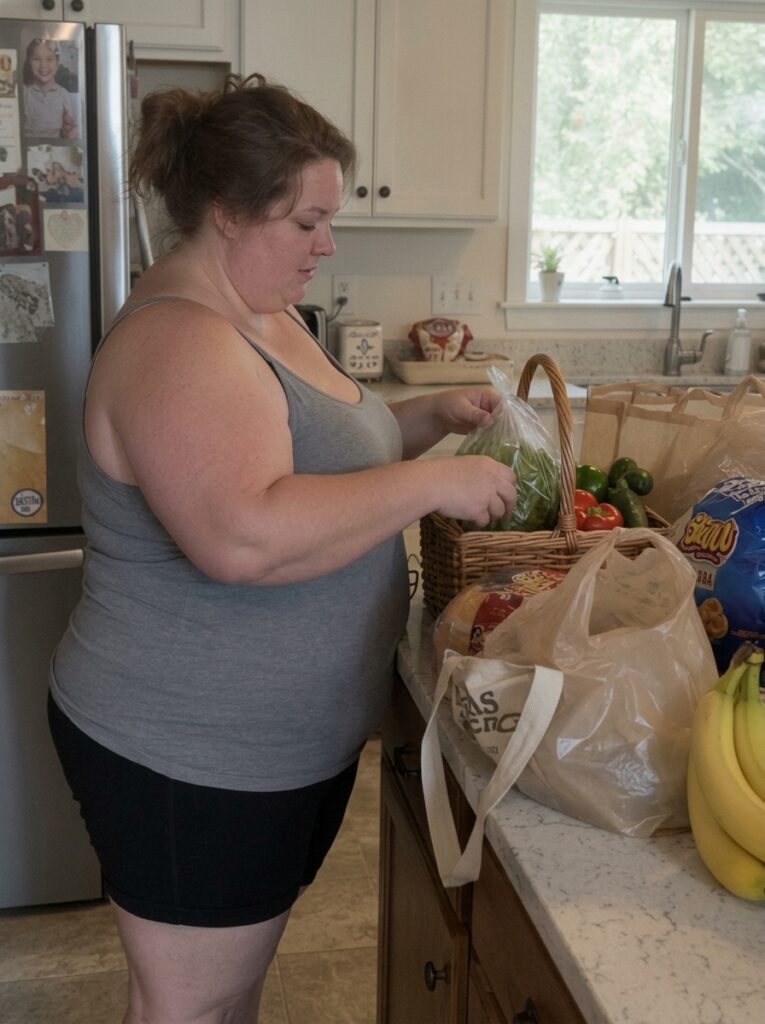
My wife Melissa, 46, had struggled with her weight for years.
Recently, she started a doctor-supervised weight-loss program, and for the first time in a long time, she seemed hopeful.
She planned meals.
Walked every morning.
Kept every appointment.
And it was working.
But every grocery trip, she still came home with donuts, cookies, chips, candy, pudding, and Pop-Tarts.
One night, after eating two donuts, she stared at the empty wrappers.
“I wish I just didn’t buy this stuff.”
So I started making it disappear.
Not all at once.
If Melissa bought eight donuts, I ate six.
If she brought home cookies, I’d finish most of them after she went to bed.
Candy disappeared into my desk drawer.
I once stood in our garage eating barbecue chips I hated because she’d had a difficult day and I knew she’d reach for them later.
I wasn’t proud of it.
But I convinced myself it was working.
Melissa kept losing weight.
Her doctor was pleased.
She started wearing clothes she’d avoided for years.
And she seemed happier.
I honestly thought I was helping.
Then last week, she brought home a box of chocolate snack cakes.
That was strange.
Melissa doesn’t even like chocolate snack cakes.
I noticed but said nothing.
The box sat in the pantry for three days.
Then one night, while Melissa was reading upstairs, I ate two.
The next afternoon, I ate three more.
By Friday, the box was empty.
That evening, Melissa opened the pantry.
“Where are the cakes?”
I looked up from my phone.
“I ate them.”
“All of them?”
“Pretty much.”
She stared at me.
Not angry.
Just strangely calm.
Then she walked to the trash, pulled out the empty box, and flipped it over.
Written underneath in black marker was one number: 12.
“What’s that?”
“I wrote down how many were in the box.”
My stomach dropped.
“Twelve.”
“Exactly.”
She put the box on the counter.
I laughed nervously.
“Okay. You caught me.”
“I caught you weeks ago.”
I stopped smiling.
Melissa opened a cabinet and pulled out a package of lemon cookies.
“You hate these.”
“I do.”
“You ate 14.”
She placed a bag of salt-and-vinegar chips beside them.
“You complain these smell like feet.”
“Melissa.”
“Yet you finished them.”
Then came coconut candy.
I hate coconut.
I had eaten that too.
“Why were you buying food you knew I hated?”
“To see if you’d still eat it.”
I stared at her.
“I was trying to help you.”
“I know.”
“You literally said you wished you didn’t buy this stuff.”
“I did.”
“So I made it disappear.”
“I know what you did, Mark.”
“How long have you known?”
“Three weeks.”
I stared at her.
“The lemon cookies. The chips. The coconut candy. You bought all of those because you knew I’d eat them?”
“Because I needed to know something.”
“What?”
“I wasn’t testing whether you’d eat the food. I already knew you would. I wanted to know whether you’d keep doing it even when I bought things you didn’t like.”
“And before you say it, no, I wasn’t hoping to catch you.”
She looked toward the pantry.
“I was hoping I’d be wrong.”
I looked at her.
“What does that mean?”
“Come with me.”
She walked out of the kitchen.
“Melissa.”
“Just come.”
I followed her upstairs.
In our bedroom, she opened the bottom drawer of her dresser.
There were cookies inside.
Chips.
Candy.
Another box of chocolate snack cakes.
Some packages were unopened.
Others weren’t.
I picked up another package of lemon cookies. The plastic had been folded over and clipped shut.
“You’ve been eating these?”
“Sometimes.”
“For how long?”
“Three weeks.”
I stared at her. She’d still been losing weight.
“These were here the whole time?”
“Yes.”
“Then what was the point of putting the others downstairs?”
Melissa took the cookies from my hand. “To find out whether I could have food available to me and make my own decisions about it.”
She closed the drawer. “And whether you could let me.”
For weeks, I’d been quietly taking credit for protecting her from choices she’d apparently been making perfectly well without me.
Melissa closed the drawer. “This isn’t about snack cakes.”
She walked back downstairs.
I followed her into the kitchen.
“You’re trying to lose weight.”
“Yes.”
“And you told me you were struggling.”
“Yes.”
“So I helped.”
Melissa nodded slowly.
“Did I ask you to?”
I opened my mouth.
Nothing came out.
“You said you wished you hadn’t bought it.”
“That’s not the same thing.”
“I thought I was making things easier.”
“For me?”
“Obviously.”
“Then why did you hide it?”
That irritated me.
Because I didn’t have a good answer.
“I didn’t want you feeling bad.”
“No. You didn’t want me stopping you.”
“Stopping me from helping you?”
“From deciding for me.”
I pushed the snack-cake box away.
“This is ridiculous.”
Melissa’s face changed.
Not anger.
Hurt.
“I knew you’d say that.”
“You knew I’d call this ridiculous?”
“No. I knew you’d make it about the food.”
I stared at her.
She sat down.
“Do you remember our anniversary dinner last year?”
I did.
Italian restaurant.
Melissa had ordered pasta, then changed her mind and gotten grilled fish.
“You told me the fish looked good,” she said.
“It did.”
“Do you remember why I changed my order?”
“No.”
“You asked if I was sure about the pasta.”
I frowned.
“That’s it?”
“Three months before that, at your sister’s birthday, I took a second piece of cake.”
“I don’t remember.”
“You said, ‘Someone’s treating herself tonight.'”
“That was a joke.”
“I know.”
She looked down.
“That’s what made this so hard.”
I stopped talking.
She continued.
“When I complained that my jeans didn’t fit, you sent me a link to a walking program.”
“You asked me what I thought you should do.”
“I said I was frustrated.”
“I was trying to help.”
“I know.”
Again.
Those two words were starting to bother me.
I know.
As if my intention wasn’t the question.
Melissa got up and walked toward the hallway closet.
She came back holding a small photo album.
I recognized it immediately.
We’d started dating more than 20 years ago.
Before smartphones.
Before our mortgage.
Before my hairline disappeared.
Before Melissa ever stood on a bathroom scale and cried.
She opened the album.
There we were at 25, standing beside a lake.
She was wearing denim shorts and my old college sweatshirt.
She was heavier in that picture than she was now.
And even as I looked at it, I realized I’d noticed that before I’d noticed how happy she looked.
She pulled the photograph free.
“Turn it over.”
My handwriting covered the back.
August 2005.
Underneath I’d written, “My favorite person.”
I swallowed.
“I remember this.”
“So do I.”
“What’s your point?”
Melissa looked at the photograph. “When I started the program, I found this.”
She touched the edge.
“And I realized I couldn’t remember the last time I felt like this woman around you.”
“What woman?”
“The one who could eat something without wondering whether you noticed.”
My chest tightened.
“Melissa, I don’t care what you eat.”
She looked toward the empty snack-cake box.
I almost laughed.
Instead, I sat down.
“This is about your health.”
“I knew you’d say that.”
“Because it’s true.”
“My doctor specifically told me this wasn’t supposed to mean never eating another cookie. She’s trying to teach me how to make those choices without turning food into something I’m afraid of.”
“I’m your husband.”
“Yes.”
“I worry about you.”
“I know you do.”
“My dad was 54.”
She went quiet.
We both knew what I meant. My father died at 54 after years of ignoring his diabetes, his blood pressure, and every warning his doctors gave him.
I was 27.
Melissa held me in the hospital parking lot while I cried so hard I couldn’t stand.
“I watched him pretend nothing was wrong until there wasn’t time left to fix it,” I said. “So, yes, when you started talking about your health, I got scared.”
Melissa reached across the table.
For a second, she held my hand.
“I know.”
“Then why are we doing this?”
“Because I’m not your dad.”
“I know that.”
“Do you?”
I pulled my hand away.
“That’s not fair.”
“Neither is making me responsible for proving I won’t become him.”
That shut me up because she was right. I’d been telling myself I couldn’t stand by and watch something happen to her.
I hadn’t asked whether what I really couldn’t stand was feeling helpless again.
Melissa looked at the photograph again. “I know you’re scared of losing me, Mark.”
“Then what were you testing?”
Her eyes filled. And suddenly she didn’t look like someone who had spent three weeks setting a trap.
She looked frightened.
“I needed to know whether that was all it was.”
“All what was?”
“The reason you wanted me thinner.”
My stomach turned.
“I never said I wanted you thinner.”
“You didn’t have to.”
“Melissa.”
“Every time I lost five pounds, you noticed.”
“Because you were proud.”
“Every time I gained it back, you stopped saying anything.”
“What was I supposed to say?”
“I don’t know.”
She wiped under one eye. “A few weeks ago, I asked myself what would happen if I stopped losing weight tomorrow. Whether you’d still look at me and think I was doing well.”
“Of course I would.”
“I couldn’t answer that for you, Mark. That’s the problem.”
I stared at my wife.
She pushed the old photograph toward me. “I used to look at this and remember how loved I felt.”
“You were loved.”
“Were?”
I heard it then. The word I’d used.
“You are. Of course you are.”
Melissa held my eyes.
“Then when did loving me turn into managing me?”
I couldn’t answer.
She wasn’t finished.
“Do you know what happens when I tell you I hate my body?”
“What?”
“You give me solutions.”
“Because I don’t want you hurting.”
“But you never tell me I’m wrong.”
I frowned.
“Wrong about what?”
“About being something that needs fixing.”
Her voice cracked.
“Every time I said I hated my body, you agreed with me by trying to fix it.”
That hurt more than I expected.
Because I could immediately remember doing it.
A gym membership.
A meal plan.
New walking shoes.
An article about sugar.
A scale that synced to her phone.
I had bought that one when she mentioned wanting to track her progress.
At the time, I’d thought it was thoughtful.
Now I remembered Melissa opening it.
Her smile.
Then the way she’d quietly put it beside the bathroom cabinet.
“I thought I was supporting you.”
“I know.”
“Stop saying that.”
“Why?”
“Because you’re making it sound like it doesn’t matter.”
“It matters.”
She leaned toward me.
“Your intention matters, Mark. But so does what it felt like to be married to it.”
I looked away.
“What did it feel like?”
She hesitated.
“Like you were waiting for me to become easier to love.”
I felt physically sick.
“Melissa.”
“That’s why I started buying the food.”
“To test me.”
“Yes.”
“Why not ask me?”
“Because I was afraid you’d tell me exactly what I wanted to hear.”
That landed.
She pointed toward the pantry.
“The food gave you a choice when you didn’t know I was watching.”
“And I ate it.”
“Every time.”
“I was trying to protect you.”
“I kept hoping you’d leave one box alone.”
Her voice broke.
That was the moment I finally understood the test.
She hadn’t been waiting to catch me.
She’d been waiting for me to stop.
Every package had been another chance.
Lemon cookies.
Salt-and-vinegar chips.
Coconut candy.
Chocolate cakes she didn’t even like.
And every time, I had quietly removed the choice from her hands and congratulated myself for loving her enough to do it.
I reached for the empty cake box.
Melissa put her hand over it.
“Leave it.”
“I’m just throwing it away.”
“I know.”
I looked at her hand over mine.
“It’s trash.”
“Then let me decide when I’m done with it.”
I let go.
Melissa pulled her hand back.
For a second, neither of us spoke.
Then I understood why she was looking at me that way.
“What do you want me to say?”
“I don’t want you to say anything.”
“Then what do you want?”
“I want my body back.”
I stared at her.
“You have your body.”
“No. I want it to be mine in this marriage.”
Her voice was calm now.
“My doctor and I will decide what this program looks like. I’ll decide what I eat. I’ll decide what I don’t eat. If I gain weight, you don’t become my coach. If I lose weight, you don’t make it the most interesting thing about me.”
“I don’t.”
“You do.”
I started to argue.
Then I remembered how often I’d said, “You’re looking great.”
Usually after she’d lost weight.
I couldn’t remember the last compliment I’d given her that had nothing to do with how she looked.
“What if I’m scared?” I asked.
“Tell me you’re scared.”
“That’s it?”
“Yes.”
“And then?”
“Trust me.”
That sounded harder than eating a hundred snack cakes.
Melissa put the photograph back into the album.
“Do you still want to be on the program?” I asked.
“Yes.”
That surprised me.
“You do?”
She almost smiled. “See?”
I understood.
Even that question had contained the assumption that I should know what came next.
“I’m sorry.”
She looked at me.
“I mean it.”
“I know.”
This time, the words didn’t irritate me.
“But I don’t know if sorry fixes this,” she said.
“I know.”
For the next few weeks, I learned how often I’d been watching her without realizing it.
Melissa opened the pantry.
My eyes followed.
She ordered dessert.
I noticed.
She skipped her morning walk.
I almost asked why.
Each time, I stopped myself.
Not because I stopped caring.
Because I finally understood that caring didn’t automatically give me authority.
We started seeing a counselor.
Melissa made one thing clear before the first appointment.
“We’re not going so somebody can teach me how to accept your help.”
“I know.”
“Good.”
Melissa kept meeting with her doctor.
She kept losing weight slowly.
Some weeks she didn’t.
I stopped asking for the number.
Then one Saturday, I came home with groceries and found a familiar box on the kitchen counter.
Chocolate snack cakes.
I froze.
Melissa was making coffee.
She saw me notice them.
Neither of us said anything.
The box stayed there all afternoon.
That night, I opened the pantry for crackers.
There it was.
For one stupid second, my hand almost reached for it.
I shut the door.
Two days passed.
Then three.
On Wednesday night, Melissa came into the living room carrying one chocolate cake.
She sat beside me.
Unwrapped it.
Took a bite.
I tried not to look.
She caught me anyway.
“It’s terrible,” she said.
I laughed.
“You hate those.”
“I really do.”
“This was another test, wasn’t it?”
Melissa looked at me.
“Not exactly. I wanted to see if I could leave food in my own kitchen without you deciding what happened to it.”
I nodded.
“And?”
She took another bite, made a face, then set it on the wrapper.
“Still terrible.”
She carried the wrapper to the kitchen.
The next morning, the box was still there.
Eleven untouched cakes remained inside.
The half-eaten one sat wrapped beside them.
For a month, I’d believed love meant eating the other eleven before she could.
Now I understood something much harder.
Melissa had never needed me to save her from the box.
She needed to know I could see it sitting there, love her exactly as she was, and leave the choice in her hands.
If someone’s attempts to “help” you left you wondering whether they still loved you as you were, would their good intentions be enough?
Enjoyed the read? Here is another story you will love: In 11 years behind that register, I’d learned not to get involved in arguments over the restrooms. Then I watched a woman block an exhausted young mother holding a screaming baby, even after she begged to be let through. What I did next was the first time I’d ever broken my own rule.