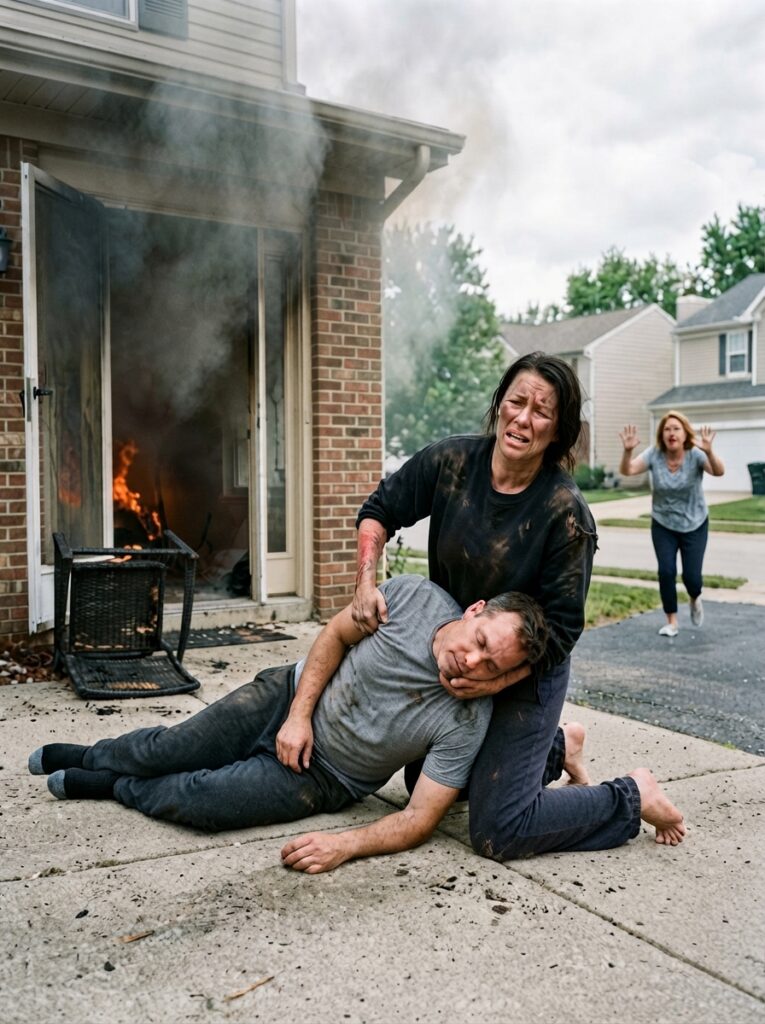
Rachel’s father kept his finger on Daniel’s signature at the bottom of the fire report while Daniel’s mother remained silent on speakerphone.
Daniel had received the same conclusion they were looking at now: the fire had started because of an electrical failure inside the wall.
So there was no misunderstanding for him to repeat.
No investigator had blamed Rachel.
Daniel had known the truth.
His mother finally spoke. “He told us there was another report.”
“There wasn’t,” Rachel’s father said.
Rachel sat very still on the sofa, her bandaged arm supported by a pillow. Only an hour earlier, she had thought the worst thing Daniel had done was walk out while she was still recovering from surgery.
Now she understood that while she had been waiting for him to come home, he had been telling other people a different version of why he wanted to leave.
“When did he start saying that?” Rachel asked.
Daniel’s mother hesitated.
“About two months after the fire.”
Rachel looked down.
That was almost exactly when Daniel had stopped sleeping beside her.
His mother continued carefully. Daniel had told his parents that Rachel refused to accept responsibility for what had happened. Then he said she became emotional whenever he tried to discuss their marriage. He said he felt trapped because everyone knew she had saved his life, and any attempt to leave would make him look cruel.
Rachel’s father’s expression hardened.
But Rachel raised her good hand before he could speak.
“What did you tell him?”
“I told him to wait until you were stronger,” Daniel’s mother admitted. “I kept calling because I wanted him to tell you himself.”
There it was.
Those were the calls Daniel had been silencing.
Not a secret client.
Not the woman Rachel had been afraid to imagine.
His mother had been calling him again and again because Daniel had already announced to his family that he intended to leave his injured wife, and she had been pushing him to stop hiding it.
Rachel closed her eyes briefly.
In a strange way, the truth hurt more because it was smaller than an affair and colder than one.
Daniel had not been swept away by someone else.
He had simply decided he did not want this marriage anymore, then built himself a version of the fire that made leaving easier to defend.
Daniel’s mother began apologizing. She said she should have called Rachel sooner. She said Daniel had made everything sound so different.
Then she said the sentence Rachel could not ignore.
“I thought maybe you really didn’t remember everything because of the medication.”
Rachel looked at the report again.
Daniel had not only lied about what happened.
He had made her injuries part of the reason his lie seemed believable.
“Do you have anything in writing?” Rachel asked.
His mother went quiet.
Then she said, “Yes.”
She had several messages.
Rachel asked her to send them.
Within minutes, screenshots appeared on Rachel’s phone.
Daniel’s words were unmistakable.
He had told his mother that Rachel had been careless with an outlet. He claimed the investigator had privately explained that the old wiring might not have failed without something Rachel had plugged in. In another message, he wrote that Rachel was refusing to accept that her actions had nearly killed both of them.
Rachel read the messages twice.
Her father read them once and put the phone down.
“I think he may be trying to blame you for the insurance claim,” he said.
For a moment, that possibility terrified her.
But the next morning, after Rachel’s mother drove her to a follow-up appointment, her father contacted the insurance representative whose information was attached to the fire documents.
His suspicion was wrong.
There was no claim accusing Rachel of causing the fire. The official record still identified the electrical failure, and Daniel had never challenged it.
That almost made the situation worse.
He had not lied because paperwork forced him to protect himself.
The lie appeared to exist for one purpose: people.
Rachel.
His parents.
Anyone whose opinion might matter when he left.
That afternoon Daniel called six times.
Rachel did not answer.
On the seventh call, he left a message.
“Your mother called my mother,” he said. “Whatever you think is happening, we need to discuss it before everyone turns this into something it isn’t.”
Rachel listened once.
Then she saved it with the other messages.
For months she had answered Daniel immediately because she was terrified that one missed call would be the moment their marriage finally disappeared.
Now that it had, she discovered silence did not feel like losing control.
It felt like getting some back.
Two days later, Daniel arrived at her parents’ house.
Rachel’s father saw him through the window and stood up.
“I’ll handle this.”
“No,” Rachel said.
She adjusted the loose sleeve covering her bandaged arm and pushed herself carefully upright.
“I will.”
Her mother stayed close enough to help if Rachel became tired, but neither parent followed her to the front room.
Daniel walked in carrying the same overnight bag he had packed when he left their house.
He looked exhausted.
For one second, Rachel almost felt the old instinct to make things easier for him.
Then his eyes moved toward the injured side of her face and away again.
The instinct disappeared.
“You called my mother,” he said.
“She called me.”
Daniel rubbed his forehead. “Rachel, she misunderstood a lot of what I said.”
Rachel placed printed copies of his messages on the table.
“Which part?”
Daniel stopped.
She pointed to the first page.
“The part where you said I caused the fire?”
He stared at the paper.
“Or the part where you said the investigator confirmed it?”
“That’s not exactly what I said.”
“It’s exactly what you wrote.”
Daniel sat down without being invited.
Rachel remained standing until her arm began aching, then took the chair opposite him.
He started explaining that the electrical system had been old, that there had been questions in the first days, that everyone had been confused.
Rachel let him finish.
Then she slid the signed report across the table.
“You received this.”
Daniel looked at his own signature.
His jaw tightened.
“That report doesn’t explain everything.”
“It explains what started the fire.”
“That’s not what this is about.”
“Then tell me what this is about.”
Daniel finally looked directly at her.
For the first time since the fire, Rachel did not try to make her expression easier for him to see.
Daniel stood abruptly.
“I can’t do this with your parents listening from the next room.”
“They’re not the ones who lied.”
He grabbed his bag and left.
That could have been the end of the confrontation.
Instead, it changed the way Rachel handled everything that came after it.
She stopped calling Daniel directly.
She arranged for her father to retrieve the rest of her medication, clothing, and medical supplies from the house. She changed the emergency contact listed with her surgical team. When Daniel sent messages asking when she planned to come home, Rachel answered only practical questions.
Her mother helped wash her hair around the healing skin. Her father drove her to appointments and waited outside when she asked him to. Neither of them tried to convince her that Daniel would come back once he calmed down.
One afternoon, her father accidentally knocked a stack of mail from the kitchen counter and muttered while gathering the envelopes from the floor.
Rachel laughed before she realized she was laughing.
It was the first ordinary sound she had made in weeks.
Then Daniel’s mother asked to visit.
Rachel almost refused.
But she agreed on one condition: no messages carried back and forth for Daniel.
His mother arrived alone.
She looked older than Rachel remembered. She brought flowers, set them on the kitchen table, and did not mention Rachel’s scars until Rachel did.
For the first twenty minutes, the two women talked about doctors, recovery, and things that did not matter enough to hurt.
Then Daniel’s mother placed her phone on the table.
“I was wrong about something,” she said.
She had believed Daniel invented the story about the fire only after deciding to leave.
But while reviewing their old messages, she found one from much earlier.
It had been sent while Rachel was still hospitalized.
Daniel had written that the marriage might never be normal again.
At the time, his mother had assumed he meant Rachel’s health.
Now the messages around it read differently.
He complained that people kept praising Rachel for saving him. He said everyone expected him to become her caretaker forever. He wrote that if he ever admitted he could not live that way, nobody would understand.
Rachel did not ask his mother to read the rest aloud.
She had already understood enough.
Daniel’s withdrawal had not begun because Rachel failed to recover quickly.
It had begun when he realized her survival had changed what people expected from him.
Rachel had run into a burning house because her husband was unconscious inside.
Daniel had apparently come out of that same fire thinking about the obligation created by being saved.
“I’m sorry,” his mother whispered.
Rachel looked at her.
“You stopped visiting me.”
The older woman’s eyes filled.
“Yes.”
“Because you believed him.”
“Yes.”
That answer hurt, but Rachel preferred it to another excuse.
Daniel’s mother did not ask to be forgiven. She gathered her purse and left after promising to send Rachel the complete message history if she wanted it.
Rachel did.
Not because she intended to punish Daniel publicly.
Because she was finished allowing him to decide which version of her other people were permitted to know.
A week later, an attorney contacted Rachel on Daniel’s behalf about a formal separation.
Rachel read the email twice.
Months earlier, she would have treated those words as proof that she needed to save the marriage immediately.
Instead, she hired her own attorney.
Daniel’s proposed statement described the marriage as having deteriorated under the strain of the fire and Rachel’s recovery. It said nothing about the false claims he had made to his family.
Rachel’s attorney advised her to keep emotion out of the response and preserve the messages.
So she did.
Daniel soon discovered that leaving quietly was no longer possible in the way he had imagined.
He could leave the marriage.
Rachel could not force him to stay, and she no longer wanted to.
But he could not require her to sign a version of events designed to protect him from embarrassment.
She rejected the statement.
Daniel called immediately.
This time Rachel answered.
“Why are you making this hostile?” he demanded.
“I’m not.”
“You’re sending private messages to lawyers.”
“They’re messages about me.”
“My mother had no right to give you those.”
Rachel almost smiled at the direction his anger had taken.
“You told her I caused the fire.”
“I was trying to explain what living with you had become like.”
“No. You were explaining what leaving me would look like.”
Daniel said nothing.
Rachel felt her hand beginning to shake around the phone, so she rested it on the table.
“I’m not asking you to stay anymore,” she said. “I’m asking you to stop lying about why you left.”
Daniel ended the call.
Three days later, Rachel’s body reminded her that emotional clarity did not make recovery easy.
During a dressing change, pain shot down her arm so sharply that she became dizzy and had to sit on the bathroom floor while her mother called the clinic.
Nothing catastrophic had happened, but the episode frightened her.
For several days, Rachel barely left the guest room.
She hated needing help to open containers. She hated sleeping in short stretches. She hated that even brushing her hair could become a calculation around tender skin.
And for the first time since leaving Daniel, she wondered whether she had mistaken anger for strength.
She cried that night—not because she wanted Daniel back, but because she finally allowed herself to mourn the person she had expected him to be.
The next morning, her father drove her to therapy without giving her a speech.
Rachel went inside.
That choice mattered more than any dramatic promise she could have made to herself.
Recovery resumed in small pieces.
She learned new stretches for her arm. She began walking farther. She answered a few messages from former coworkers who had stopped knowing what to say after the fire.
Eventually, one of the managers from the cosmetics chain where Rachel had worked asked whether she would consider helping train consultants remotely until she was ready to return in person.
Rachel almost declined.
Before the fire, so much of her work had depended on presenting beauty as something effortless.
Now mirrors could still surprise her.
But she accepted one training session.
Then another.
She did not hide her face from the camera.
She also did not turn her scars into an inspirational speech.
She simply did her job.
Meanwhile, Daniel’s relationship with his parents changed.
His mother stopped defending his account of the fire. His father, who had remained mostly silent, finally asked Daniel why he had needed Rachel to be responsible for an accident the official report had already explained.
Daniel refused to answer.
Then came the last meeting Rachel ever attended with him as his wife.
It took place in a conference room with their attorneys present.
Daniel barely looked at her when he arrived.
The discussion stayed practical until his attorney raised the proposed language about the marriage deteriorating because of Rachel’s recovery.
Rachel’s attorney placed the fire report and Daniel’s messages beside each other.
“We’re not agreeing to that characterization,” she said.
Daniel leaned back.
“This is ridiculous. I never said she deserved what happened.”
Rachel had been quiet until then.
Now she spoke.
“No. You said I caused it.”
Daniel looked at her.
“That’s different.”
“It was useful.”
His expression changed.
Rachel continued before anyone could interrupt.
“If I caused the fire, then you weren’t the husband leaving the woman who burned herself saving you. You were the husband escaping the woman responsible for destroying your life.”
Daniel stared at the table.
Nobody in the room rescued him from the silence.
Finally he said, “Do you have any idea what it was like after the fire? Every person who saw me told me how lucky I was to have you. Every conversation was about what you did for me.”
Rachel waited.
Daniel’s voice dropped.
“And every time I looked at you, I knew what I was supposed to feel.”
There it was.
Not an investigator.
Not an electrical outlet.
Not Rachel’s medication, memory, or supposed instability.
Daniel had wanted distance from the debt he felt whenever he saw the consequences of the night she saved him.
Instead of admitting that, he had changed the story until the person who rescued him became the person he needed protection from.
Rachel felt something inside her settle.
Months earlier, those words would have destroyed her.
Now they answered the question that had kept her waiting beside unanswered messages and untouched dinners.
“If you had told me you couldn’t stay,” she said, “I would have been devastated.”
Daniel finally lifted his eyes.
“But you were allowed to leave. You were never allowed to rewrite what happened to make leaving easier.”
Daniel opened his mouth.
Rachel stopped him.
“I don’t need another explanation.”
The disputed language disappeared from the separation agreement.
There was no dramatic courtroom victory, no public humiliation, and no moment when the damage Daniel caused could simply be reversed.
There were only consequences he could no longer hand to Rachel.
His parents knew he had lied to them. Rachel knew she had not imagined his withdrawal. Their attorneys handled the remaining communication, and Daniel could no longer use her fear of losing him to keep her waiting for answers.
Months later, Rachel returned to the cosmetics office for the first time.
A few people stared too long before catching themselves. One colleague hugged her carefully. Another simply handed her the materials for the training session and asked where she wanted to begin.
Rachel preferred that.
She was still having treatments. Some days her arm moved easily; some days it did not. She was still learning which parts of her old life she wanted back and which had belonged to a woman who no longer existed in quite the same way.
One evening, after another long appointment, Rachel came home to her parents’ house and stood in their kitchen.
Her mother asked if she wanted takeout.
Rachel looked into the refrigerator.
Then she took out the ingredients for the meal she had cooked on the night Daniel packed his suitcase.
Her father recognized it immediately.
“Wasn’t that his favorite?” he asked.
Rachel set a pan on the stove with her good hand.
“It was.”
Her father waited.
Rachel looked at her mother, then at the table where the three of them had spent months sorting medication, appointments, legal papers, and all the pieces of a life she had once expected to share somewhere else.
“Tonight it’s mine.”