I thought my father kept ruining every first date. Then I found the letter my mother had left behind eight years after her death.
My mother died eight years ago.
For the first three, Dad wouldn’t even look at another woman.
Then, at 68, he finally started dating.
I was happy for him until I noticed a pattern.
Six women in 18 months.
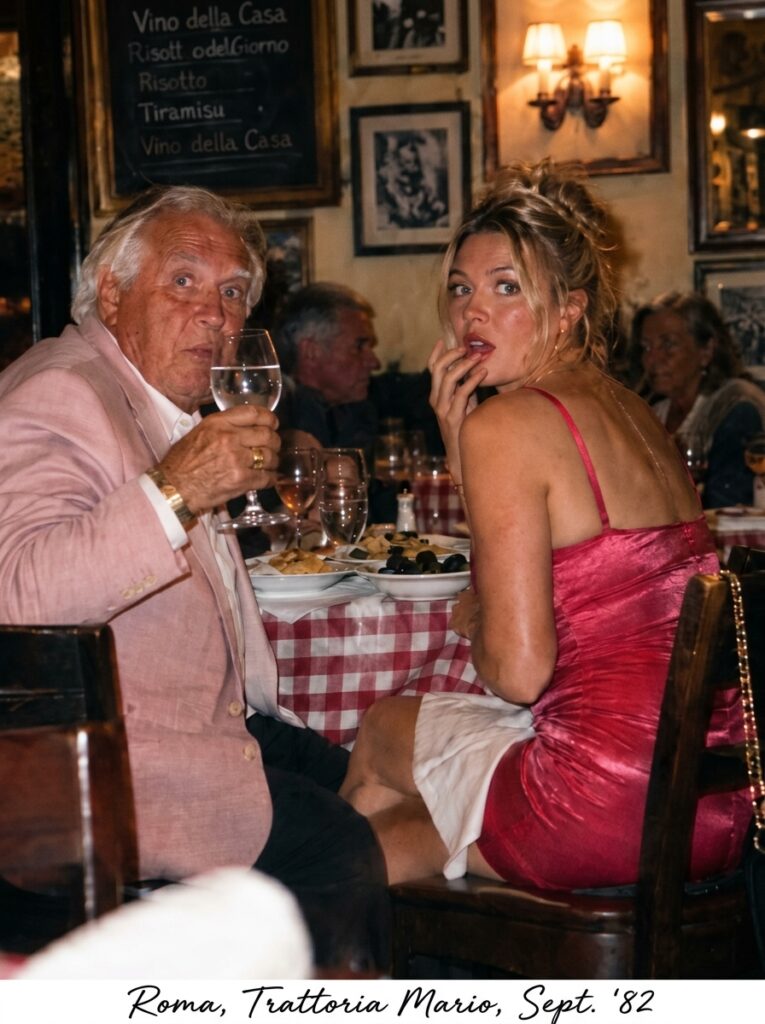
Every first date happened at the same Italian restaurant across town.
And every woman disappeared afterward.
No second date. No explanation. Most wouldn’t even answer Dad’s calls.
When the seventh woman canceled plans to see him again, I’d had enough.
I drove to the restaurant alone.
The waitress recognized the photo on my phone immediately.
“Oh. Tom.”
“You’ve served him before?”
Her expression changed.
“Several times.”
“Then please tell me. What does he do to these women?”
She stared at me. “Your father? Nothing.”
That wasn’t the answer I’d expected.
She glanced toward the kitchen, then lowered her voice.
“It’s what happens when they ask for the check.”
She led me to a corner booth.
“Your father always sits here. Same table. Same chair.”
Then she pointed at the wall behind it.
The wall was covered with photographs from opening night in 1987. Dozens of smiling people stood beneath strings of lights.
Years later, Dad had added one of his own. In it, three young people stood together.
Dad was near the back. So was Mom.
But beside them stood another young woman whose face had been scratched almost completely away.
My stomach tightened.
“Who is she?”
The waitress didn’t answer.
Instead, she reached beneath the booth and pulled out a small envelope taped underneath.
My name was written across the front.
“Rachel.”
I froze. “How long has that been there?”
“Your father puts a new one here before every date.”
Before I could touch it, someone behind me said, “Please don’t open that.”
I turned.
The woman standing beside the bar looked to be in her mid-60s. Silver hair, blue coat, both hands wrapped around a handbag.
I looked from her to the photograph.
Same narrow jaw. Same deep-set eyes.
Even beneath the scratches, I knew it was her.
“You were here last night,” I said.
She nodded.
“You are the woman who canceled on Dad.”
“I was the woman he met. It wasn’t a date.”
The waitress quietly walked away.
I looked at her.
“Then who are you?”
The woman glanced at the photograph. “My name is Helen.”
“How do you know my father?”
“Longer than you’ve been alive.”
“So you were together.”
Helen’s expression barely changed. “No. We never were.”
“Don’t lie to me.”
“I’m not.”
“You were standing beside him in 1987. Your face is scratched out. He’s been bringing women here for 18 months, and suddenly you’re sitting across from him.”
“It wasn’t a date.”
“Then what was it?”
Helen looked at the envelope. “Your father was asking me if eight years was long enough.” She pulled out the chair opposite me and signalled for me to sit.
“No. You can tell me standing.”
She studied me for several seconds.
Then she said, “Your mother chose every woman your father dated.”
I laughed once because the sentence was absurd.
“Mom has been dead eight years.”
“I know.”
“So try again.”
Helen opened her handbag and removed a folded sheet of yellowing paper.
She didn’t hand it to me. She placed it on the table between us.
At the top was Mom’s handwriting.
“Tom,”
“If you’re reading this, you finally ignored me long enough to open the blue box.”
My knees weakened.
I sat.
“There are more,” Helen said.
“More what?”
“Pages.”
“Where?”
“Your father has them.”
I reached for the paper.
Helen pressed her palm over the page between us.
“Rachel, your mother was sick for almost two years before you knew how serious it was.”
I remembered those months.
Mom saying she was tired. Mom refusing vacations. Mom telling me the treatment was working when it wasn’t.
By the time she admitted she was dying, we had 11 weeks.
“You knew?”
Helen nodded.
“Before Dad?”
“Before either of you.”
I pushed back from the table. “You were her doctor?”
“No.”
“Then why would she tell you?”
Helen looked at the ruined photograph.
“Because I was her best friend.”
I almost laughed again.
Mom had never mentioned a Helen.
And neither had Dad.
Not once.
“Best friends don’t scratch each other out of photographs.”
“Usually they don’t.”
I pulled the picture off the wall before she could stop me.
The frame was old, but the scratches weren’t. They cut deep across Helen’s face.
Written on the backing board was one date.
On the back, in Mom’s handwriting, were five words. “Take her off the list.”
I looked at Helen.
“What list?”
She closed her eyes.
“Of women she thought your father should marry afterward.”
I laughed because the alternative was believing her. “Mom made Dad a dating list?”
“Seven names.”
“And he actually used it?”
“Eventually.”
Six women in 18 months. Every one at this restaurant.
My laughter stopped. “Why here?”
“Because this is where your parents met.”
“I know that.”
“It is also where your mother made the list.”
Helen finally lifted her hand from the letter.
“She made me help her.”
I snatched it. The first page wasn’t romantic. It was instructions.
Names.
Numbers.
Small descriptions beside each one.
“Anna likes old movies.”
“Beth hates seafood.”
“Lydia talks when she’s nervous, so give her time.”
Six names had check marks.
The seventh line had been violently crossed out.
Helen.
My eyes lifted.
“You were on it.”
“At first.”
“Why?”
Helen looked toward the empty chair where Dad always sat. “Because Maggie thought I understood him.”
I hadn’t heard anyone outside our family call Mom Maggie in years.
It made my skin prickle.
“And then she changed her mind.”
“Yes.”
“Why?”
Helen didn’t answer.
I stood.
“I’m calling Dad.”
“Rachel.”
I was already dialing. He answered on the fourth ring.
“Hey, sweetheart.”
“I’m at the restaurant.”
Silence.
I looked at Helen.
Dad said, “Is she there?”
That hurt more than I expected.
“You knew she’d be here?”
“No.”
“But how did you know who I meant?”
Another silence.
“Dad…”
“Rachel, I can explain. Please don’t open the envelope.”
I looked down at my name.
“Why does everybody keep saying that?”
“Because it isn’t how I wanted you to find out.”
“Then you shouldn’t have taped it underneath a table.”
He arrived twenty minutes later.
He looked older when he saw the photograph in my hands.
“Mom did this?”
Dad nodded. “At home. I brought it here after she died.”
He sat in his usual chair. Helen moved to leave.
I blocked her. “No. If Mom erased you from the photograph, you’re staying.”
Dad flinched.
I set the list between them. “Start talking.”
Dad looked at Helen. Helen said, “You tell her.”
He rubbed both hands over his face.
“Your mother knew I wouldn’t try to date again.”
“Apparently she was wrong.”
“No. She was right.”
He tapped the list. “For five years, I never opened it.”
“Why start?”
“Because of you.”
I stared at him.
“On your 39th birthday, you told me you wanted me to have a life.”
I remembered.
Dad nodded. “That night I opened the box.”
“What box?”
“The blue one your mother left in my closet.”
Helen looked away.
Dad explained that inside the box were seven sealed envelopes.
Six for the women Mom had chosen.
One for Dad.
Mom knew he’d feel guilty dating again.
So she chose women she believed would accept that part of Dad would always love her.
My throat tightened despite myself. “That’s why they leave?”
“No.”
“Then why?”
Dad looked at Helen.
“When the check comes, I give them Mom’s letter. Then I show them mine.”
“What letter?”
“The one Maggie wrote to me.”
I pushed the list toward him. “You mean this?”
“No.”
Dad reached into his jacket and removed a folded white page.
The creases were nearly worn through.
He handed it to me.
Most of it was what I expected.
Mom telling Dad she loved him.
Mom telling him not to spend the rest of his life alone.
Then I reached the final paragraph.
“If Helen ever comes back into your life, promise me she will remain your friend and nothing more. Anyone else, Tom. Just not her.”
I read it twice.
Then I looked at Helen. “You were in love with him.”
“No.”
Dad said, “Rachel.”
“Was she?”
“No.”
“Was he in love with you?”
Helen answered this time.
“Not while your mother was alive.”
The room seemed to shrink.
I stared at Dad. He didn’t deny it.
Helen’s voice softened.
“Your mother got sick. Your father was exhausted. You were working in another state. I started helping.”
I remembered trays of food appearing in Mom’s refrigerator, appointments Dad somehow managed, fresh sheets when Mom was too weak to climb the stairs.
I’d thought Dad had done everything.
“Helen did those things?”
He nodded.
“And Mom knew?”
“Yes.”
Helen swallowed. “For a while, she was grateful.”
“For a while?”
Dad looked at the photograph.
“Then Maggie started watching us.”
Nothing had happened.
No affair.
No kiss.
No secret meetings.
But Mom saw something neither of them had admitted.
Helen could make Dad laugh during the worst year of his life.
Dad could sit silently beside Helen without pretending to be strong.
Mom began to fear the life that might continue after hers ended.
“So she crossed you off,” I said. “And scratched your face out.”
Helen nodded.
“Yes.”
“But why did you disappear?”
Helen’s eyes filled.
“Because she asked me to.”
I stared at her. “Mom told you to leave?”
“Three weeks before she died.”
Dad’s head snapped toward her.
“What?”
Helen went pale.
“You didn’t know?”
Dad stood so quickly his chair struck the wall. “Helen.”
“She told me you knew.”
“No.”
For the first time, Helen looked really frightened.
Dad said, “What exactly did she say?”
Helen’s voice shook.
“She said you wanted your final weeks together without me around. She said you felt guilty asking me to leave yourself.”
Dad stared at her.
“I never said that.”
“I know that now.”
Helen reached into her handbag. This time she removed a small sealed envelope.
Her name was written across it.
“Maggie gave me this the day she asked me to go.”
Dad didn’t take it.
I did.
Inside was one page.
Helen had kept it for eight years.
Mom’s handwriting became shakier toward the bottom.
“I know what I am asking you to give up.”
“But I am dying, Helen.”
“You are not.”
“If you stay, he will love you after me.”
“Maybe not tomorrow. Maybe not for years.”
“But he will.”
“And I cannot spend my final days watching the woman who will eventually take my place.”
“Please give me this one selfish thing.”
“Leave before I do.”
Dad sat down.
For eight years, he’d believed Helen disappeared because watching Mom die had been too painful.
Helen had believed Dad wanted her gone.
I looked at the ruined photograph. One lie. Eight years.
Then another thought hit me.
“The dates.”
Dad didn’t look up.
“You told every woman about Helen.”
“Yes.”
“Why?”
“Because I showed them what your mother asked me to do.”
I frowned.
“Each woman got a letter from Maggie. What did they say?”
“That she had chosen them. That she hoped one might make me happy.”
Then I understood.
Mom had chosen every woman sitting across from him.
Dad hadn’t asked them out because he wanted them. He was working through her list.
And every one had eventually realized it. And every one of them asked the same question.
“Why are you still obeying her?”
“What did you tell them?”
Dad looked at me.
“That loving someone doesn’t stop when they die.”
“No,” I said. “But control should.”
His face crumpled.
Helen whispered, “Rachel.”
I turned on Dad. “You knew Mom didn’t want you near Helen. Fine. But after the first woman told you this was wrong, why keep going?”
“I thought I owed your mother.”
“You gave her eight years.”
“I gave her 36.”
“She’s dead, Dad.” The words landed hard.
I hated saying them. But somebody had to.
“Mom doesn’t need protecting from what happens next.”
He stared at the table.
I picked up the envelope with my name.
“Why do you keep leaving these?”
Dad looked away.
“Every time, I promise myself I’ll give it to you afterward.”
“And every time you don’t.”
“No.”
I tore it open. There was only one page.
“If you are reading this, I finally ran out of excuses.”
“I loved your mother.”
“I still love her.”
“But loving her has become the reason I am afraid to live.”
“I kept telling myself loyalty meant obeying her last wishes.”
“The truth is, obedience was easier than choosing something she could no longer forgive me for.”
“And if Helen ever sits across from me again, I don’t know what I will choose.”
Dad was crying. So I asked the question neither of them had asked in years.
“Helen, why did you come here last night?”
She looked at Dad. “He called me.”
Dad whispered, “I asked her to dinner.”
“And you canceled seeing him again.”
Helen nodded.
“Why?”
She looked at Mom’s scratched-out face beside hers. “Because I heard Maggie’s voice saying I was taking her place.”
I took the photograph.
Both of them looked at me.
“No. You don’t get to do this anymore.”
Dad frowned. “Rachel.”
“You don’t get to keep dating women Mom approved because you’re scared of the one she didn’t. And Helen, you don’t get to keep leaving because a dying woman asked you to disappear.”
Neither spoke.
I pointed at the two empty chairs.
“Sit.”
Helen almost smiled. “You’re ordering us around now?”
“Apparently somebody has to.”
Dad looked at her.
For the first time since I’d arrived, she looked back.
I picked up my coat.
Dad stood.
“Where are you going?”
“Home.”
“What are we supposed to do?”
I looked at the scratched photograph.
“I don’t know.”
Then at him. “That’s the point.”
Six weeks later, Dad called me after dinner.
He sounded nervous.
“I saw Helen tonight.”
I smiled.
“At the restaurant?”
“No.”
That mattered.
“Where?”
“Somewhere new.”
A month after that, I returned to the Italian restaurant.
The old photograph was still on the wall.
Helen’s face was still scratched away.
I asked the waitress why they hadn’t replaced it
She handed me a clean copy Dad had brought that morning.
Same night.
Same people.
Helen stood beside Mom, laughing.
Dad stood on Mom’s other side.
Three young people who had no idea how complicated love would become.
I placed the clean photograph beside the damaged one.
I left them both there.
Some things shouldn’t be erased just because they hurt.
But they shouldn’t be the only version left hanging on the wall.
Enjoyed the read? Here is another story you will love: Someone left a nasty message about my seven-year-old son, and I figured it was just another stranger being awful online. Then they sent me an old video of myself saying something about my son I couldn’t remember.